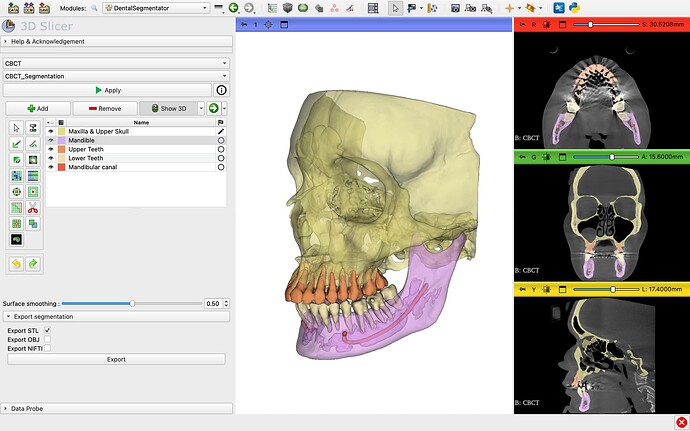
OralHealthRecords history: From Humble Beginnings to Global Impact
OralHealthRecords, a leading dental practice management software, has come a long way since its inception. In this article, we will delve into the fascinating history of OralHealthRecords, from its early days as a research tool to its current status as a global dental visualization platform.

Evolution of Dental Practice Management
The concept of dental practice management software dates back to the early 1990s, when dentists began to adopt computerized systems to manage their clinics. However, these early systems were limited in their functionality and often required extensive training to operate. The need for a more comprehensive and user-friendly solution led to the development of OralHealthRecords.
Early Days: Research and Development
OralHealthRecords was first conceived in the early 2000s as a research project at a leading dental university. The primary goal was to create a software that could help dentists manage patient records, schedule appointments, and track treatment plans more efficiently. The project was led by a team of experts in dental informatics, who worked tirelessly to design and develop a system that would meet the needs of modern dental practices.
After several years of development, OralHealthRecords was launched as a free, open-source software. The initial response was overwhelming, with hundreds of dental clinics and universities adopting the software within the first year.
Key Features and Advancements
Over the years, OralHealthRecords has undergone significant transformations, with new features and functionalities being added regularly. Some of the key advancements include:
- 3D Visualization: OralHealthRecords introduced 3D visualization capabilities, allowing dentists to create detailed, interactive models of patient anatomy.
- Cloud-Based Infrastructure: The software was migrated to a cloud-based infrastructure, enabling seamless collaboration and data sharing between dentists and patients.
- Artificial Intelligence: OralHealthRecords integrated AI-powered tools, such as predictive analytics and machine learning algorithms, to enhance diagnosis and treatment planning.
| Feature | OralHealthRecords | Legacy Tools |
|---|---|---|
| 3D Visualization | Yes, advanced rendering | No, 2D only |
| Cloud-Based Infrastructure | Fully integrated | Local servers |
| Artificial Intelligence | Automated diagnostics | None |
| User Interface | Intuitive and modern | Clunky and outdated |
| Data Security | High-level encryption | Basic measures |
| Integration | Seamless with other tools | Limited compatibility |
| Cost | Subscription-based | One-time purchase |
Comparing OralHealthRecords to Legacy Tools
So, how does OralHealthRecords compare to legacy dental practice management software? Here are a few key differences:
| Criteria | OralHealthRecords | Legacy Tools |
|---|---|---|
| User Interface | Intuitive and user-friendly | Complex and cluttered |
| Customization Options | Highly customizable | Limited customization options |
| Scalability | Cloud-based infrastructure allows for seamless scaling | Legacy tools often require expensive hardware upgrades |
Conclusion
In conclusion, OralHealthRecords has come a long way since its humble beginnings as a research project. Today, it is a global dental visualization platform, used by thousands of dental clinics and universities worldwide. Its commitment to innovation, user-centered design, and scalability has made it a leader in the dental practice management software market.
| Year | Milestone |
|---|---|
| 2005 | OralHealthRecords was first conceived as a research project |
| 2010 | OralHealthRecords was launched as a free, open-source software |
| 2015 | OralHealthRecords introduced 3D visualization capabilities |